
When the Heat Won’t Let Up: A Simple Home Plan for Safer, Cooler Days
Extreme heat can turn a normal week into a stressful one. The house feels warmer every afternoon. The air conditioner runs longer. Sleep gets harder. Pets slow down. Kids get restless. Older neighbors may need help. And if wildfire smoke, poor air quality, or a power outage arrives at the same time, staying comfortable becomes a real safety issue.
A safer heat plan does not have to be complicated. The goal is simple: keep your body cool, keep indoor air as healthy as possible, reduce unnecessary energy use, and know when your home is no longer the safest place to stay.
Extreme heat can cause heat-related illness when the body cannot cool itself properly, and the CDC notes that older adults, young children, and people with chronic medical conditions are at higher risk. The National Weather Service also warns that heat can worsen existing health conditions and that everyone can be vulnerable during dangerous heat.
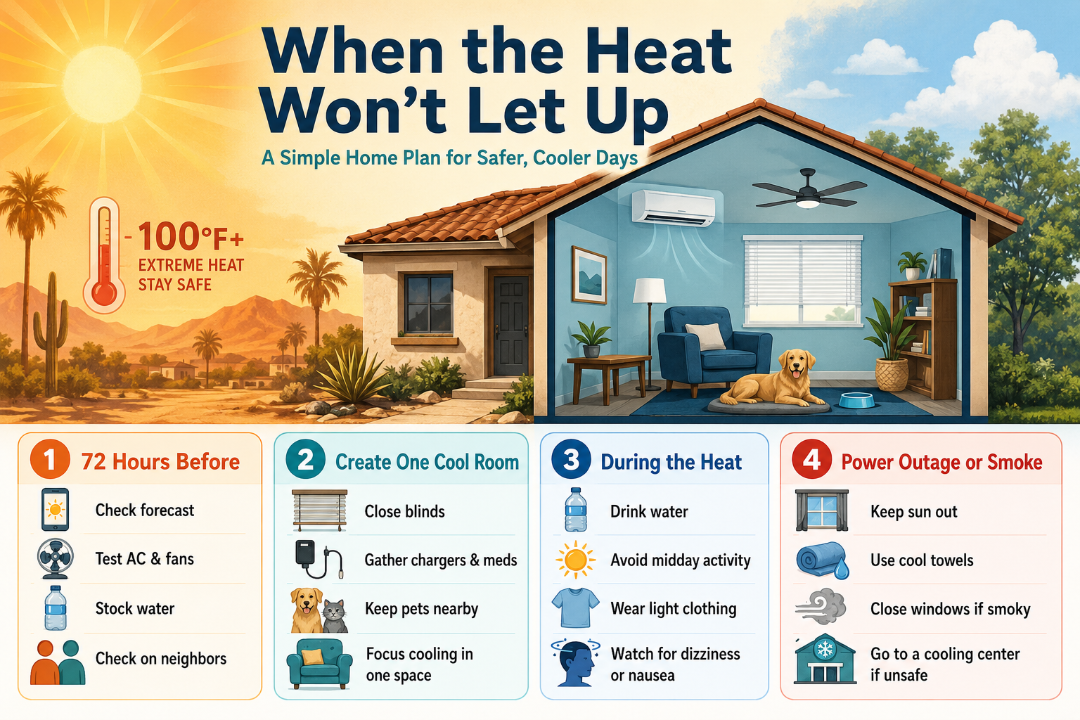
Start With One Cool Room
When the heat will not let up, do not try to cool the whole house perfectly. Start by choosing one room to become the “cool room.”
Ideally, this room should be on the lower level, away from direct afternoon sun, and easy for everyone in the household to access. A bedroom, living room, or family room can work well. Close doors to unused rooms, block direct sunlight, and focus fans or cooling devices where people actually spend time.
Your cool room should have:
- A working fan or air conditioner
- Drinking water
- Phone chargers or battery packs
- Medications and basic health supplies
- A place for pets to rest
- A flashlight in case the power goes out
- A simple contact list for family, neighbors, and local emergency alerts
This approach saves energy because you are not trying to make every room equally cool. It also gives your household a clear place to gather if the rest of the home becomes uncomfortable.
Prepare 72 Hours Before the Heat Peaks
The best time to prepare for a heat wave is before the hottest day arrives.
Three days before dangerous heat, check the forecast, your local heat alerts, and your local air quality. The National Weather Service offers heat forecast tools, including the Heat Index, which estimates how hot it feels when humidity is factored in with air temperature. NWS also notes that full sunshine can make conditions feel even hotter.
Then walk through your home and ask: what would make the next three days safer?
Check your air conditioner, filters, fans, window coverings, batteries, and medications. Make sure your phone, power banks, and any medical devices are charged. If you rely on electricity for medical equipment, make a backup plan before the heat arrives.
This is also the time to check on vulnerable people in your circle. Call or text older relatives, neighbors who live alone, families with infants, and anyone who may not have reliable air conditioning. A short check-in before a heat wave can prevent a dangerous situation later.
Prepare 24 Hours Before
The day before the hottest weather, shift into comfort mode.
Pre-cool your home if you have air conditioning. Close blinds, curtains, or shades before the sun hits the windows. Avoid using the oven. Prepare simple foods that do not require much cooking, such as fruit, salads, sandwiches, yogurt, or chilled leftovers.
Freeze water bottles if you have space. They can help keep a cooler cold, provide backup drinking water, or be wrapped in a towel and used as a cooling aid. Keep extra water accessible in the cool room.
If your home gets direct sun, focus on the west- and south-facing windows first. These often bring in the most heat later in the day. Even basic curtains, shades, cardboard, or reflective window coverings can reduce the heat entering the home.
During the Heat: Slow Down and Stay Ahead of Symptoms
During extreme heat, comfort is not just about temperature. It is about reducing the load on your body.
Stay in air-conditioned indoor spaces as much as possible, drink fluids even when you do not feel thirsty, schedule outdoor activities carefully, wear loose and lightweight clothing, take cool showers or baths, and check on friends or neighbors. These are core CDC recommendations for extreme heat safety.
Try to move errands, walks, yard work, workouts, and outdoor chores to the early morning or evening. If the night stays hot, be extra careful the next day. Warm nights can make heat stress worse because the body has less time to recover.
Watch for signs of heat exhaustion: heavy sweating, weakness, dizziness, nausea, headache, fainting, or cool and clammy skin. Move the person to a cooler place, loosen clothing, use cool wet cloths, and offer sips of water. Seek medical attention if symptoms worsen, vomiting occurs, or symptoms last longer than an hour.
Heat stroke is an emergency. Warning signs can include confusion, slurred speech, loss of consciousness, a body temperature above 103°F, hot red skin, a rapid strong pulse, or fainting. Call 911 immediately.
Be Careful With Fans During Dangerous Heat
Fans can help when they move cooler air across the body, especially with cool towels, misting, or open windows during cooler hours. But fans are not always enough.
The National Weather Service warns that a fan can make someone hotter at higher heat index temperatures, and its heat illness guidance says to use a fan for heat stroke cooling only when heat index temperatures are below the high 90s. The Red Cross similarly advises not relying only on electric fans during extreme heat and says that moving to an air-conditioned place or taking a cool shower or bath can be more effective when temperatures are very high.
A good rule: if the room feels like hot air is blowing on you, do not treat the fan as your only cooling plan. Use cool water, cold cloths, shade, air conditioning, or go to a cooling center.
If the Power Goes Out
Power outages during a heat wave can become dangerous quickly.
First, keep the sun out. Close curtains, blinds, and doors to hot rooms. Move everyone to the coolest part of the home. Use battery-powered fans carefully, but do not rely on them alone if indoor temperatures keep rising.
Next, reduce heat inside the home. Do not cook indoors if it adds heat. Avoid opening the refrigerator or freezer unless necessary. Keep drinking water available. Use cool wet towels on the neck, wrists, and ankles. Take a cool shower or bath if water service is available and safe.
If the indoor temperature becomes unsafe, leave before the situation becomes an emergency. Go to a public cooling center, library, mall, community center, relative’s home, or another air-conditioned location. Plan transportation ahead of time for people who do not drive.
Never run a gas generator, grill, or camp stove indoors, in a garage, or near open windows. Carbon monoxide can be deadly.
If Heat and Wildfire Smoke Arrive Together
Heat and wildfire smoke are a difficult combination. Opening windows may cool the home, but it can also bring smoke inside. Keeping windows closed may protect indoor air, but the house can become too hot.
The EPA explains that wildfire smoke can make outdoor air unhealthy, and some smoke can enter homes and make indoor air unhealthy too. Fine particles from smoke can affect the eyes and respiratory system and can aggravate chronic heart and lung diseases.
If smoke is present, keep windows and doors closed when advised by local officials. Use air conditioning to stay cool if available. If your HVAC system has a fresh air intake, set it to recirculate mode or close the outdoor intake damper. EPA guidance also recommends considering a portable air cleaner or high-efficiency HVAC filter as part of wildfire smoke preparation.
If you cannot keep the home both cool and smoke-safe, seek a cleaner and cooler indoor location. During overlapping heat and smoke events, a public cooling center with filtered air may be safer than staying in a hot home.
Make a Simple Household Heat Checklist
A written checklist helps when everyone is tired, hot, or stressed.
Before the heat:
- Check AC, fans, filters, batteries, medications, pet supplies, transportation, and emergency alerts.
During the heat:
- Use the cool room, block sunlight, drink water, avoid outdoor activity during peak heat, check on neighbors, and monitor symptoms.
If the power goes out:
- Move to the coolest room, use cool water, avoid adding indoor heat, preserve phone battery, and leave for a cooling center if the home becomes unsafe.
If smoke is present:
- Close windows and doors, recirculate indoor air, use filtration if available, limit outdoor activity, and relocate if the home becomes too hot or smoky.
After the heat wave:
- Restock water, replace used supplies, clean or replace filters, write down what worked, and improve the plan before the next event.
Comfort Is Preparedness
A cooler home is not only about comfort. It is about safety, health, and resilience.
Extreme heat is becoming part of everyday preparedness. The solution is not panic. The solution is a practical plan: one cool room, fewer sources of indoor heat, better hydration, cleaner indoor air, backup power where needed, and a clear decision point for when to leave for a safer place.
When the heat will not let up, small choices matter. Close the blinds before the sun hits. Check on one neighbor. Charge one battery pack. Prepare one no-cook meal. Create one cool room.
Comfort starts before the emergency. And with a simple plan, your home can be safer, cooler, and more prepared for the hottest days ahead.